|
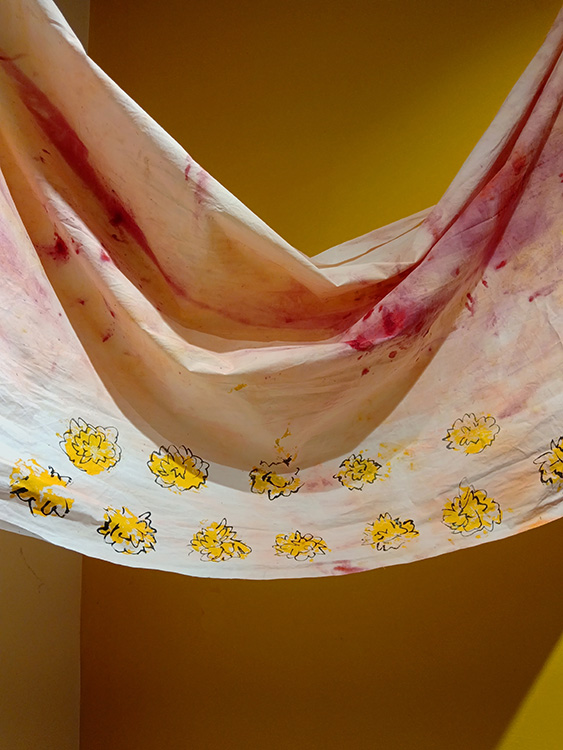
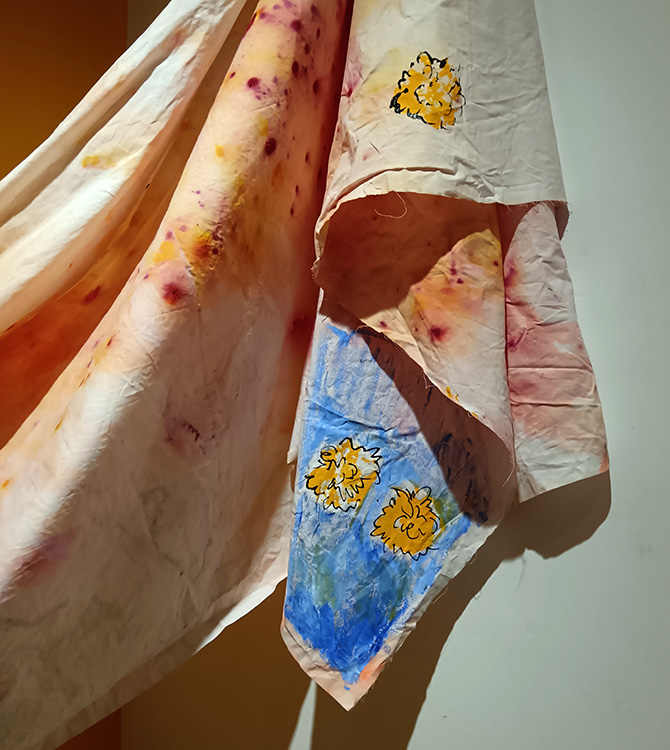
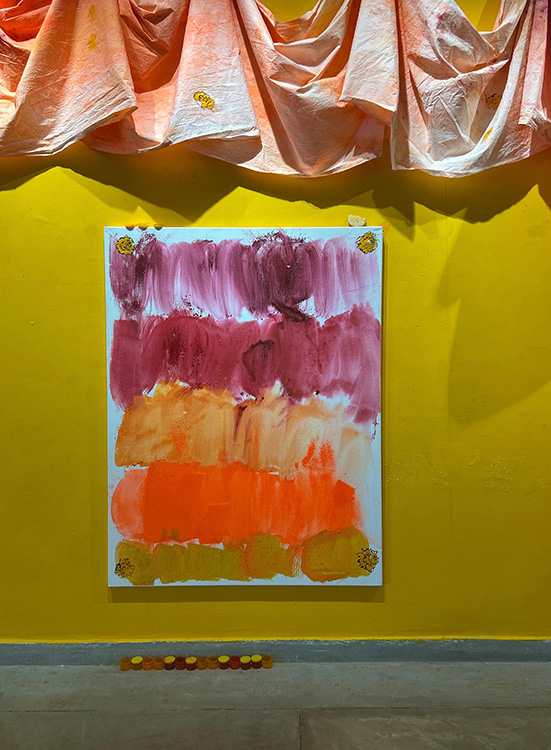
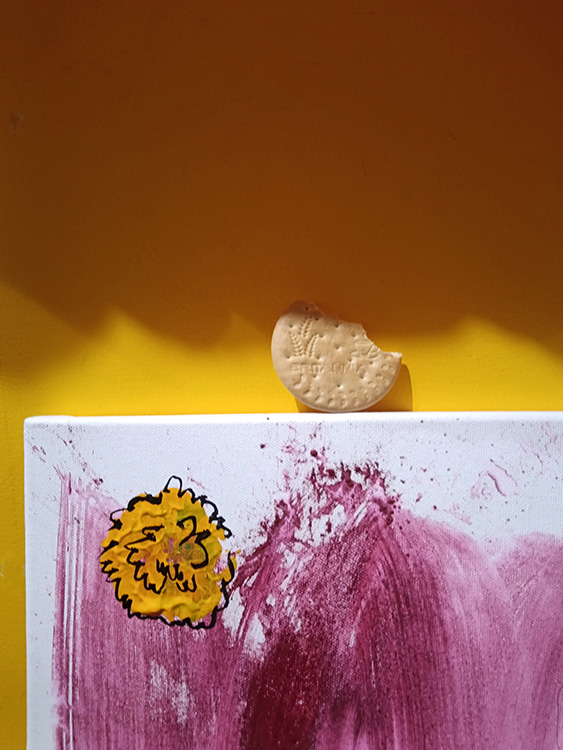
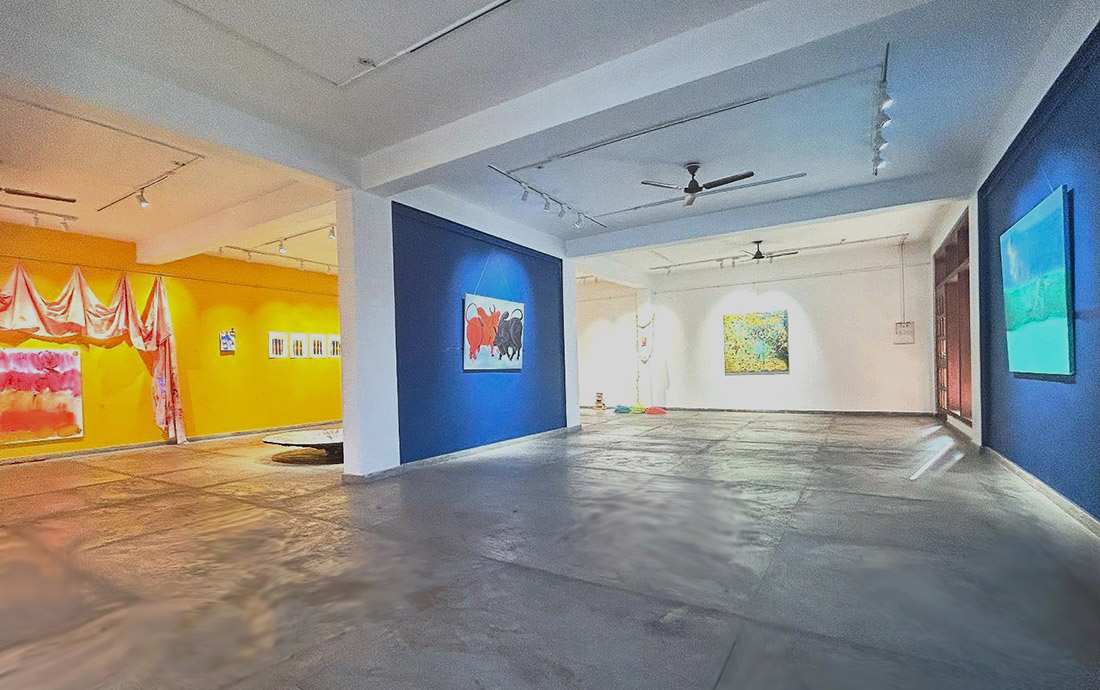
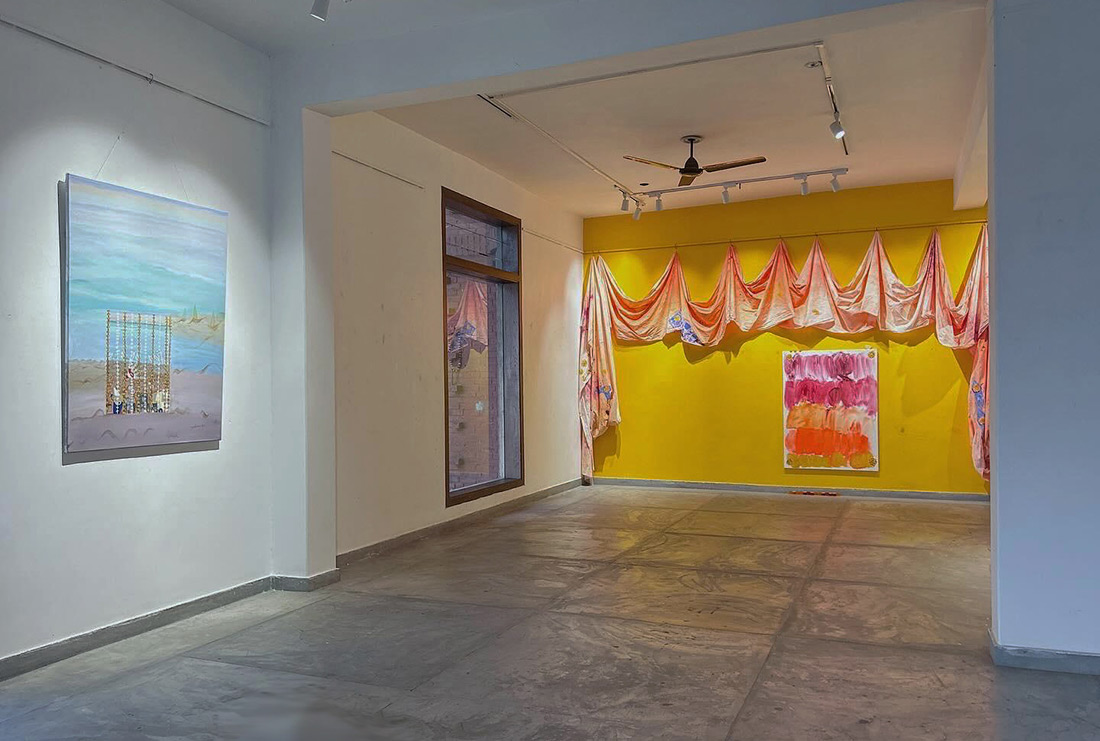
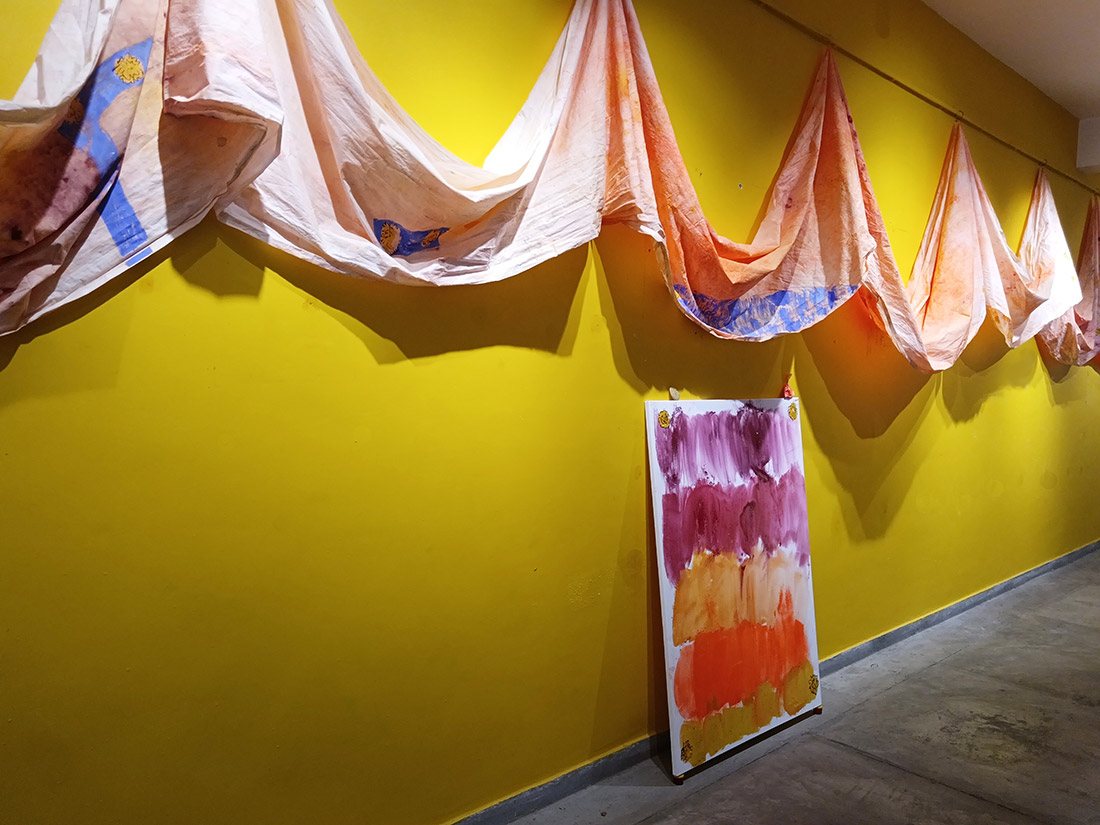
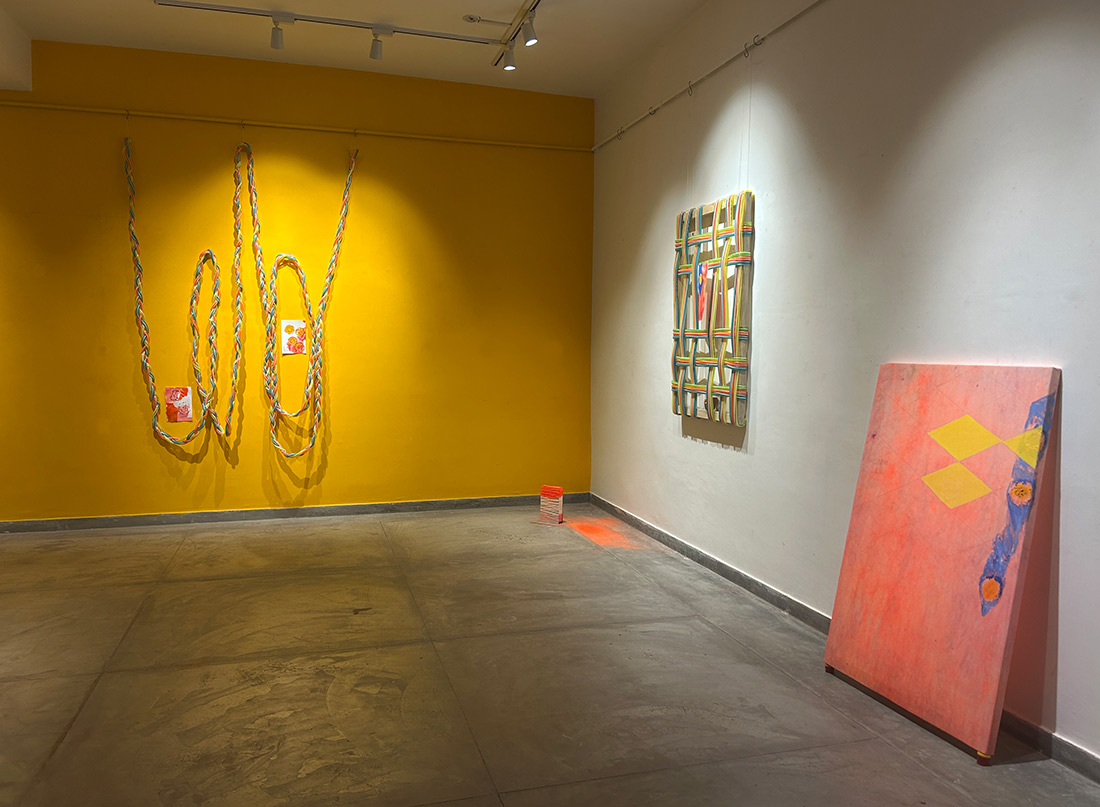
Vues de l'exposition Mother Ganga, Gallery ISHII, Varanasi, Inde, 2026
Avec Madan Lal, Prayag Shukla, Santosh Kumar Singh, Bhagya Ajaikumar, Sunita Verma, Gilles Bingisser et Hazel Ann Watling
Dans le cadre du symposium international Freiraum 27/28 |
| |
| |
 |
| |
 |
| |
 |
| |
|
| |
|
| |
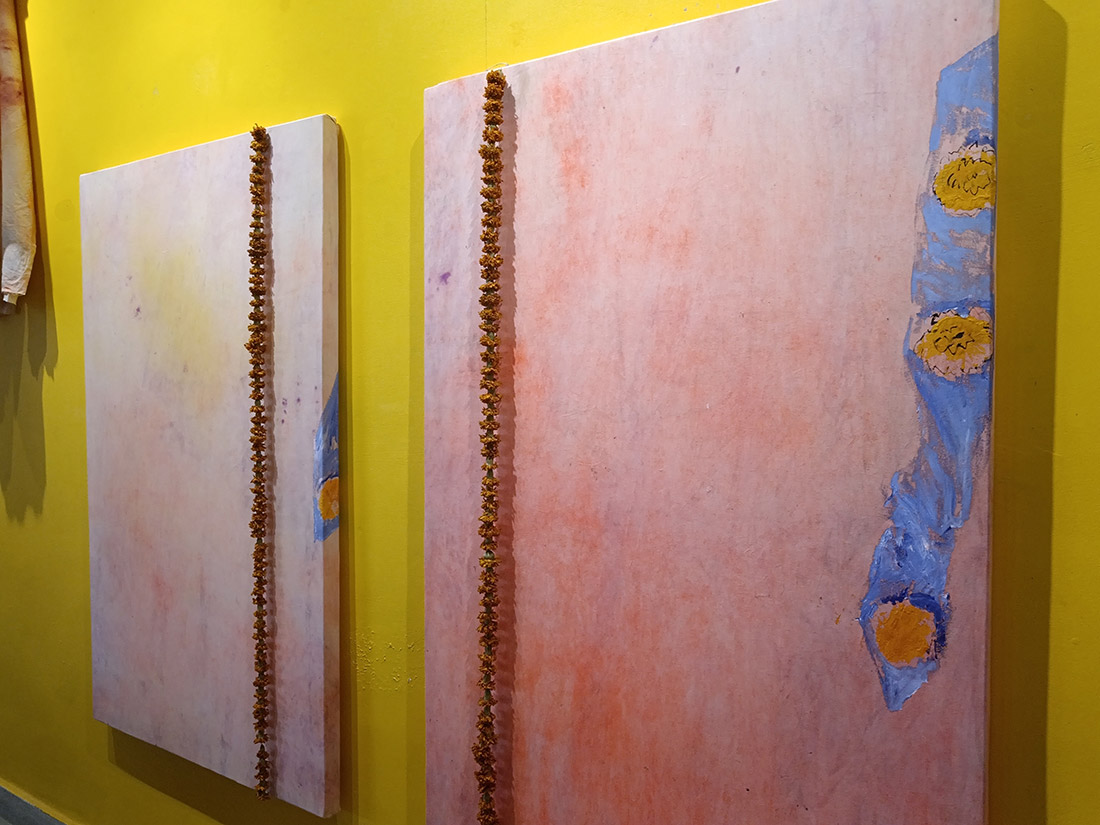
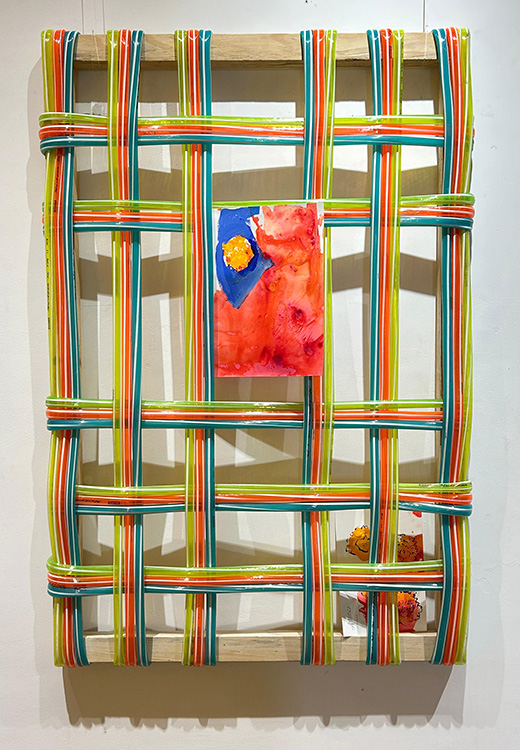
Ce travail a pris forme dans le cadre du symposium international Freiraum 27/28, entre Sète et Kashi/Varanasi, et a été présenté dans l’exposition Mother Ganga. Il s’est construit à partir d’un déplacement — géographique, mais aussi perceptif — en travaillant au contact de nouveaux contextes, matériaux et usages.
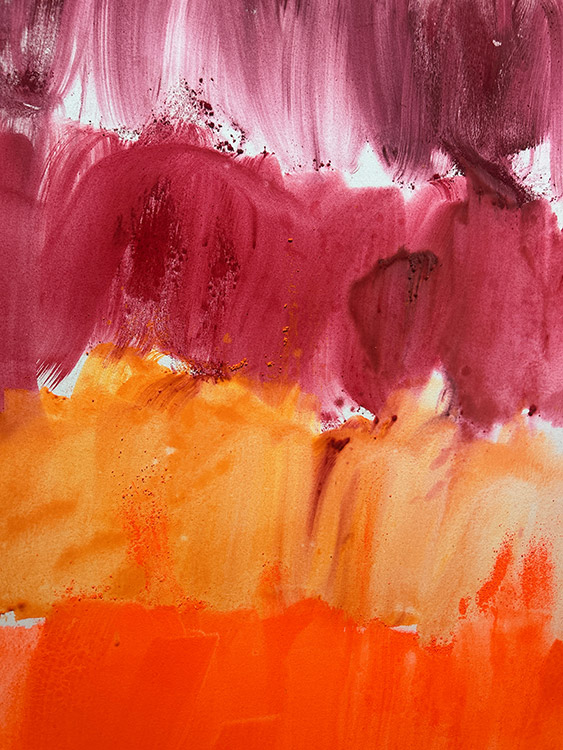
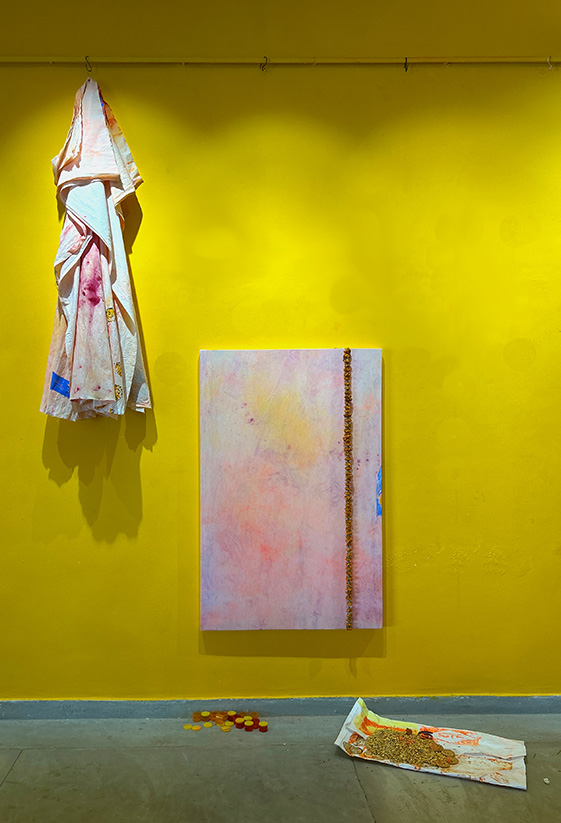
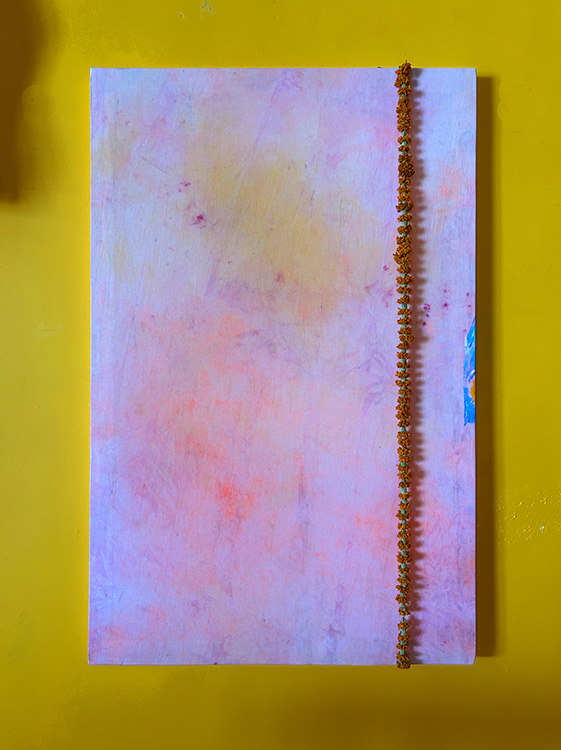
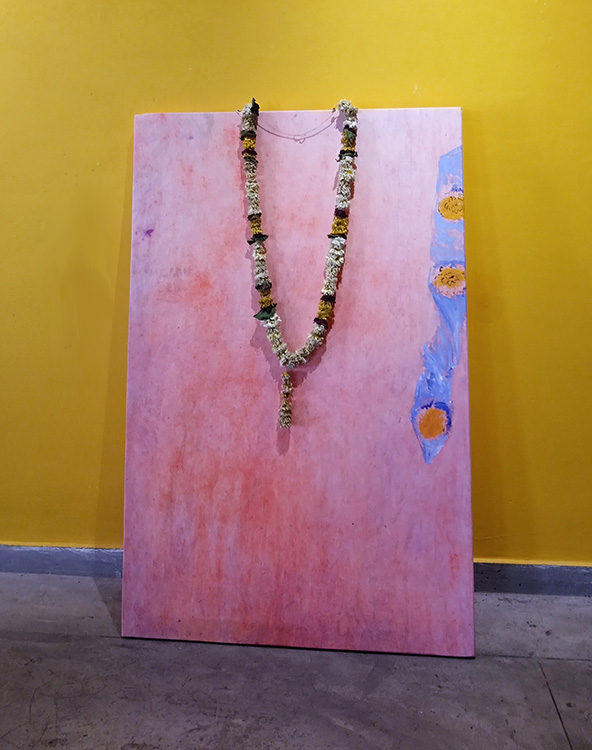
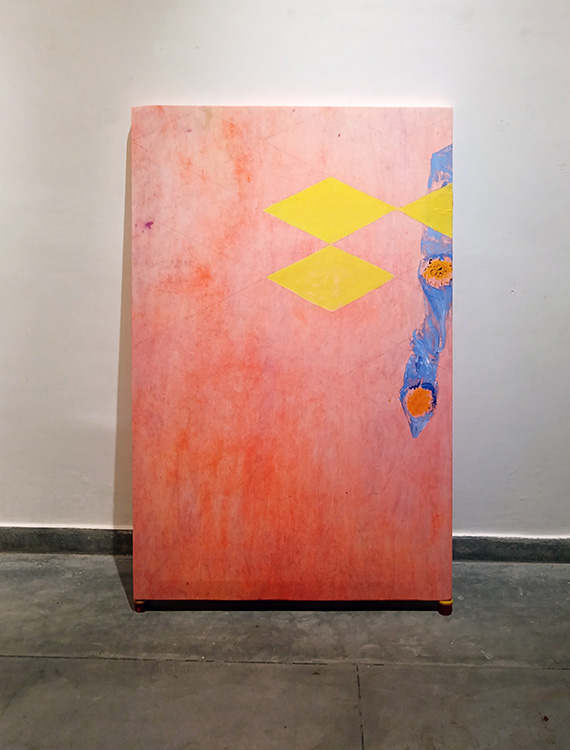
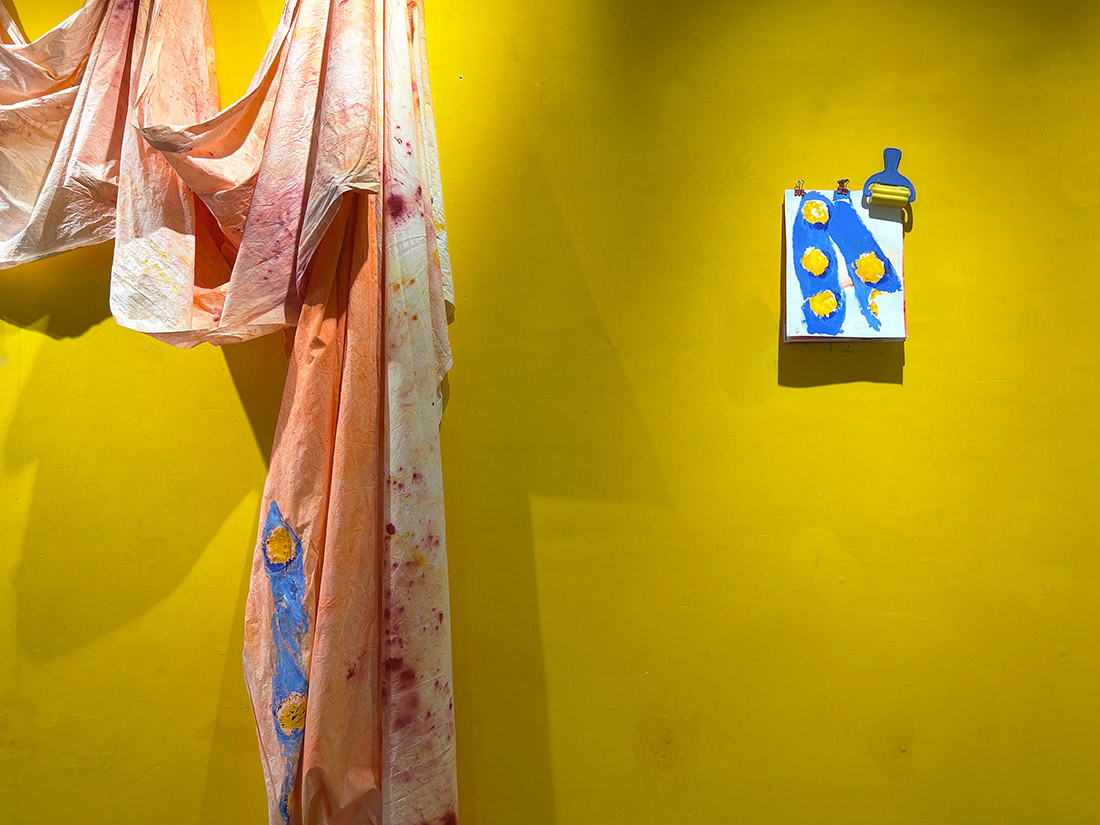
Ici, la peinture ne se limite plus à la toile. Elle déborde, se déplace, se dépose ailleurs. Les surfaces peintes deviennent des zones ouvertes — elles absorbent, accueillent, laissent passer. Elles ne cherchent pas à tout contenir.
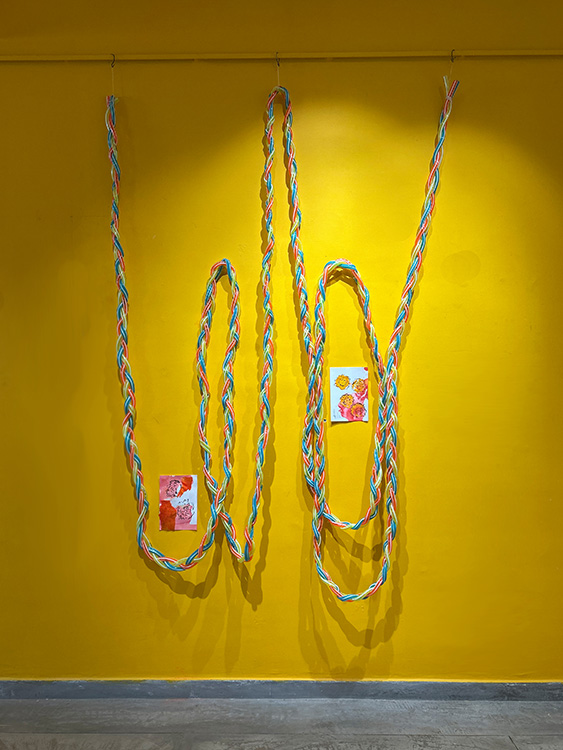
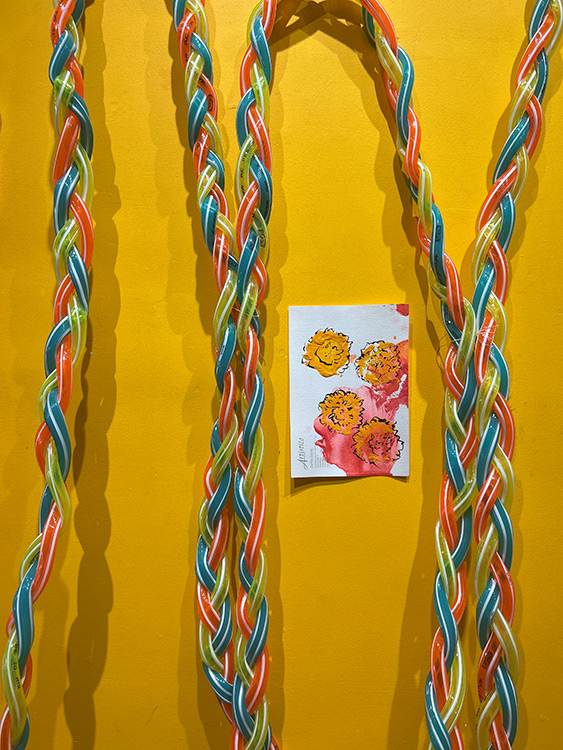
Les tissus, les guirlandes, les pigments, les objets — tout circule. Les guirlandes, en particulier, ne sont pas utilisées comme des images à représenter, mais comme des formes actives : elles coupent, traversent, suspendent. Elles amènent avec elles du temps, de la transformation, une certaine idée du passage.
Les tissus prolongent ce mouvement. Drapés, noués, laissés à sécher, ils oscillent entre quelque chose de très quotidien et quelque chose de plus rituel, sans jamais se fixer complètement. Parfois, tout s’ouvre et se déploie dans l’espace. Parfois, au contraire, ça se resserre — ça se plie, ça se contient, ça retient à l’intérieur des matières en train de changer.
Ce qui m’intéresse ici, ce n’est pas de représenter un lieu ou une culture, mais de voir ce qui se passe quand des formes passent d’un contexte à un autre. Comment elles se transforment, se décalent, parfois se vident, parfois se rechargent autrement.
Dans Mother Ganga, le travail apparaît comme une série de situations plutôt qu’un ensemble d’objets fixes. Des choses se tiennent ensemble un moment — images, matières, gestes — puis se déplacent à nouveau. Rien n’est complètement stable, mais rien ne disparaît vraiment non plus. |
|
| |
 |
| |
 |
| |
 |
| |
 |
| |
Garlands, Painting, and Spatial Ornament
Hazel Ann Watling
Garlands have been present in my work prior to my residency in Varanasi, emerging through processes of repetition, accumulation, and suspension. Encountering them within the city’s visual and ritual landscape, however, sharpened my attention to their spatial and symbolic dimensions. In temples, markets, and along the streets — hung across thresholds, draped over statues, or worn on the body — they function as both everyday objects and gestures of devotion. More than decoration, they organize space, movement, and attention.
This experience reinforced my understanding of decoration as a form of language. Ornament is often perceived as secondary or superficial, yet it operates as a system of signs — carrying meanings, gestures, and histories across time and culture. Like language, it can be learned, repeated, transformed, or misread. It is through this instability that it remains alive.
Garlands, composed of repeated elements threaded into a continuous line, embody this logic. They function simultaneously as ornament and structure: flexible, responsive, and almost architectural in their capacity to define thresholds and guide perception. Their construction — through simple gestures of threading, tying, and repeating — resonates with my own process, where forms accumulate, shift, and sometimes slip unexpectedly. The garland becomes less a motif than a structural analogue for image-making: a chain of gestures unfolding over time.
This capacity to drift — conceptually, visually, and materially — is central to my practice. Decorative forms, like garlands, carry traditions and inherited meaning, yet as they move through contexts they loosen from their origins. Similarly, in painting, the material itself drifts: pigment layered, scraped, or suspended responds to gravity, gesture, and texture. Forms repeat but subtly shift; color spreads or pools; lines bend or bleed. Drift allows the work to exist between intention and chance, structure and flexibility.
In Varanasi, garlands exist within a living ritual framework beyond my full understanding. My engagement with them is therefore necessarily partial — mediated by attention, translation, and movement. This distance is not a limitation, but a productive condition. As forms drift across contexts, their meanings loosen: what once functioned as devotion or offering may be encountered primarily through rhythm, color, or structure. The same happens with paint: its physical behavior creates moments of openness, surprise, and re-interpretation.
In my current work, I explore how these rhythms and structures can extend into space. Paintings and textile elements hang, fold, and repeat within architectural settings, drifting in perception and materiality. The image becomes modular, mobile, and spatial, able to inhabit a room like a garland inhabits a doorway or temple. Drift operates both as a formal strategy and as a metaphor: for displacement, recontextualization, and the negotiation between tradition and transformation.
What persists through these shifts is not a stable meaning, but a trace. Decoration, as a language, carries fragments of its origins even as it drifts. It holds together attachment and distance, memory and abstraction, presence and movement. In this sense, it reflects a broader human condition: the continual negotiation between belonging and displacement, between inherited forms and their reinvention.
It is within this space — between attention and distance, tradition and transformation, intention and material drift — that my work takes shape. |
|
| |
 |
| |
 |
| |
 |
| |
 |
| |
Sans titre (tresse de shiva) 2026
Avec Simple Peacock |
| |
 |
| |
Sans titre (tresse de shiva) 2026
Avec Simple Peacock |
| |
 |
| |
| Avec Simple Peacock |
| |
|
| Work in progress |
| |
Freiraum 27 a commencé à Sète comme une ouverture plutôt qu’un cadre. Organisé par Europe Art Exchange, il ne s’agissait pas tant de définir un « espace libre » que de l’éprouver — observer ce qui émerge lorsque des pratiques, des corps et des langues commencent simplement à coexister.
Avec Madan Lal, Josef Bernhardt, Tina Stöger, Francois Poyet, Shigeru Abe, aux côtés de Gilles Bingisser et Hazel Ann Watling, réunis à LATELIER artist-run space, quelque chose de fragile a pris forme. Travailler côte à côte, sans chercher l’accord. Laisser les gestes se répondre sans se comprendre pleinement. Il y eut des moments d’intensité, d’autres de silence, d’autres encore de dérive. L’espace libre apparaissait là, dans ces intervalles.
Peindre devenait une manière d’être-avec. Les corps penchés, les mains chargées de matière, les outils qui circulent. Rien n’était isolé. Chaque geste portait déjà la trace d’un autre — une présence, une parole, un regard. L’espace n’était pas donné : il se fabriquait, lentement, par accumulation, par friction.
Puis il y a eu Varanasi.
À Ishii Gallery, au sein de Ram Chhatpar Shilp Nyas, un groupe recomposé — Madan Lal, Prayag Shukla, Santosh Kumar Singh, Bhagya Ajaikumar, Sunita Verma, avec Gilles Bingisser et Hazel Ann Watling — s’est retrouvé déplacé, exposé à une autre densité.
Ici, l’espace ne s’ouvre pas de la même manière. Il est déjà là — chargé, stratifié, habité. Le fleuve — le Gange — impose son rythme, sa présence continue. On ne crée pas l’espace seul ; on entre dans un espace qui nous précède.
L’architecture est poreuse. La lumière s’infiltre, la chaleur s’installe, les sons circulent. Le travail se fait au sol, ensemble, parfois en silence, parfois dans une concentration presque physique. De grandes formes peintes se déploient comme des surfaces ouvertes, instables, traversées de lignes et de tensions. Le geste devient plus direct, presque nécessaire. Il ne s’agit plus seulement de dialogue, mais de se situer.
Le texte Mother Ganga de Josef Bernhardt accompagne cette expérience comme une voix en arrière-plan. Le fleuve y apparaît comme un corps en transformation constante — accumulation, dérive, dissolution. Travailler ici, c’est peut-être accepter de ne pas contenir, de ne pas fixer. Laisser les formes émerger et se disperser. |
|
| |
|
| |
|
|
|