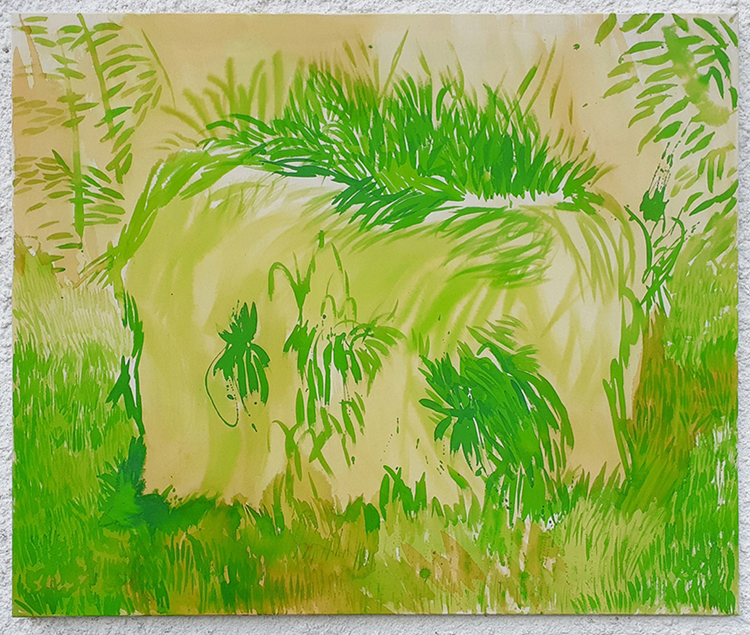
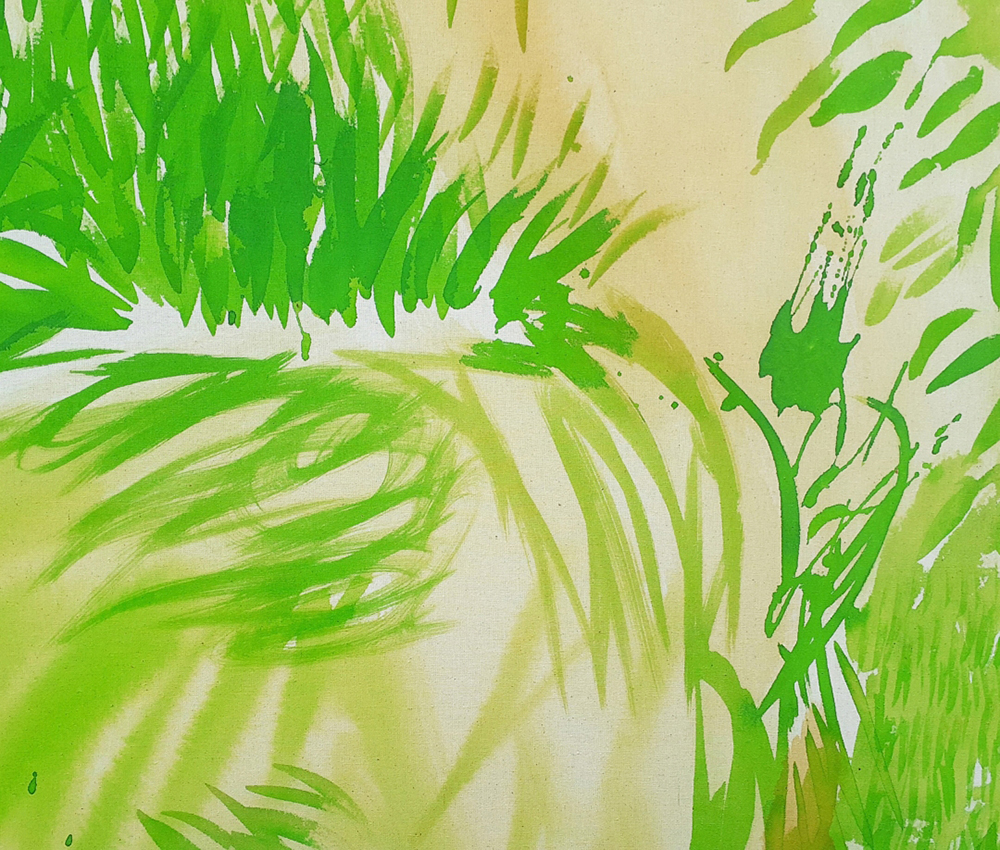
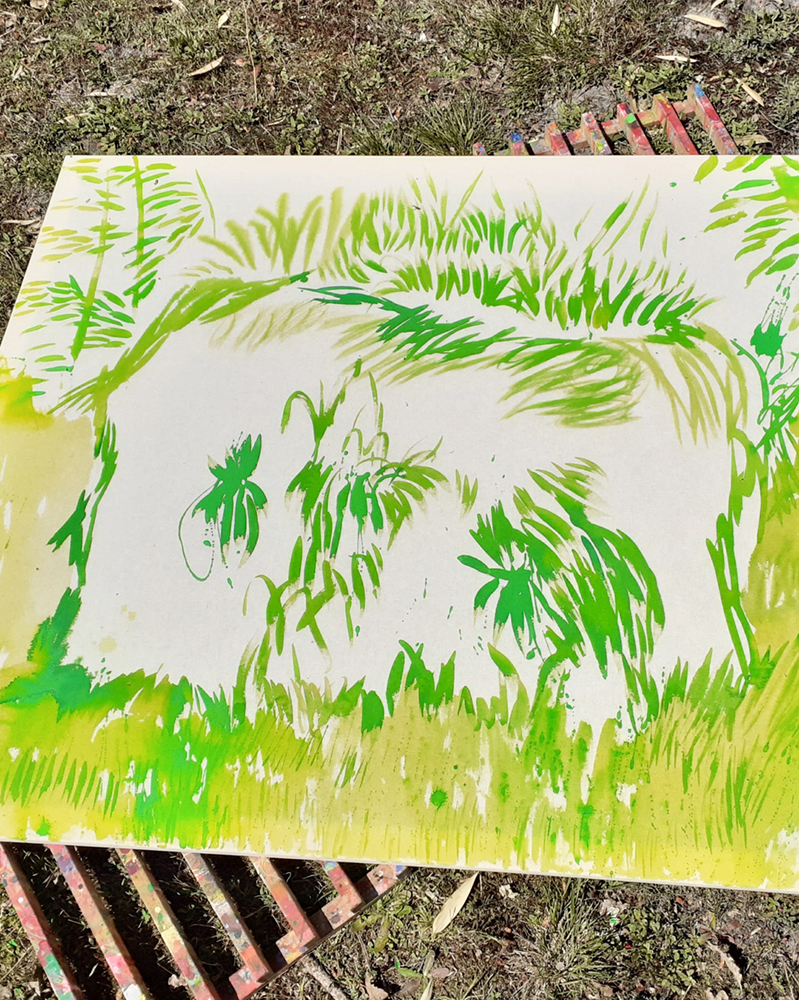
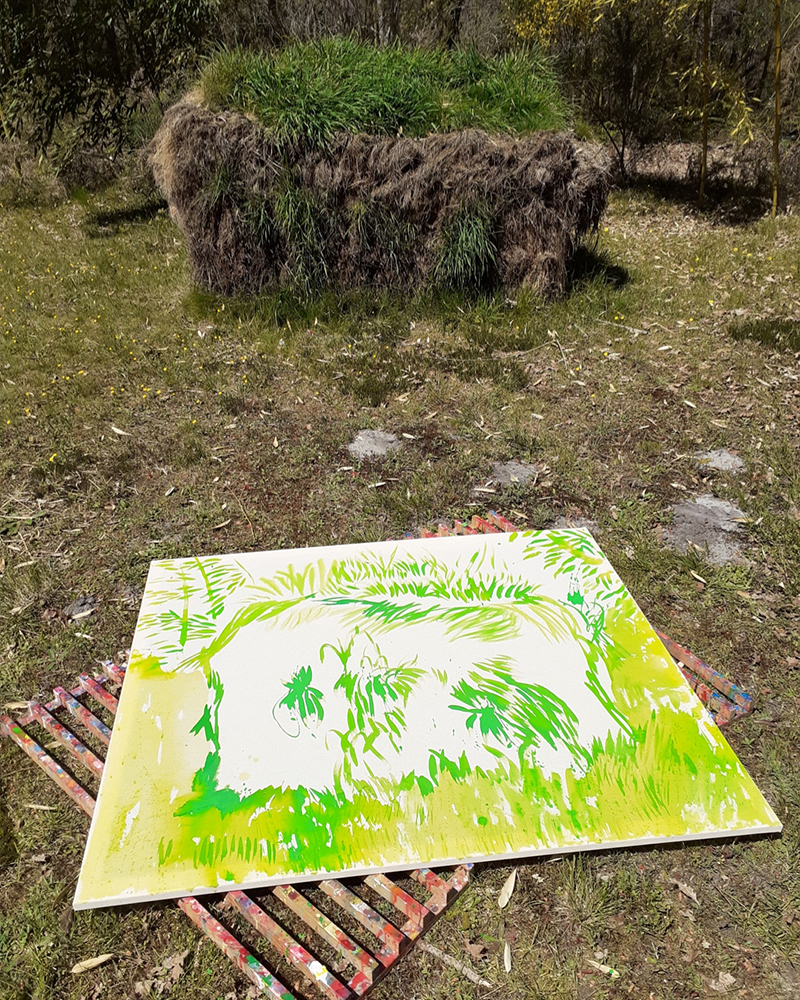
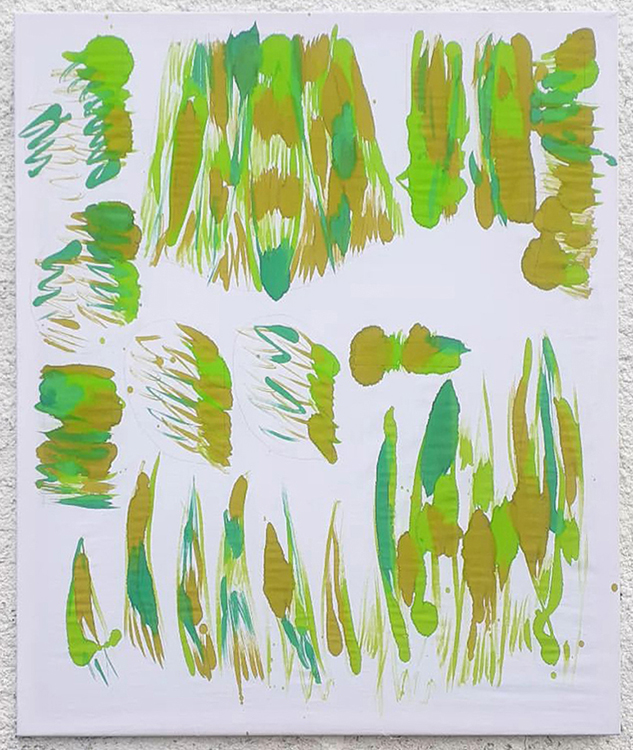
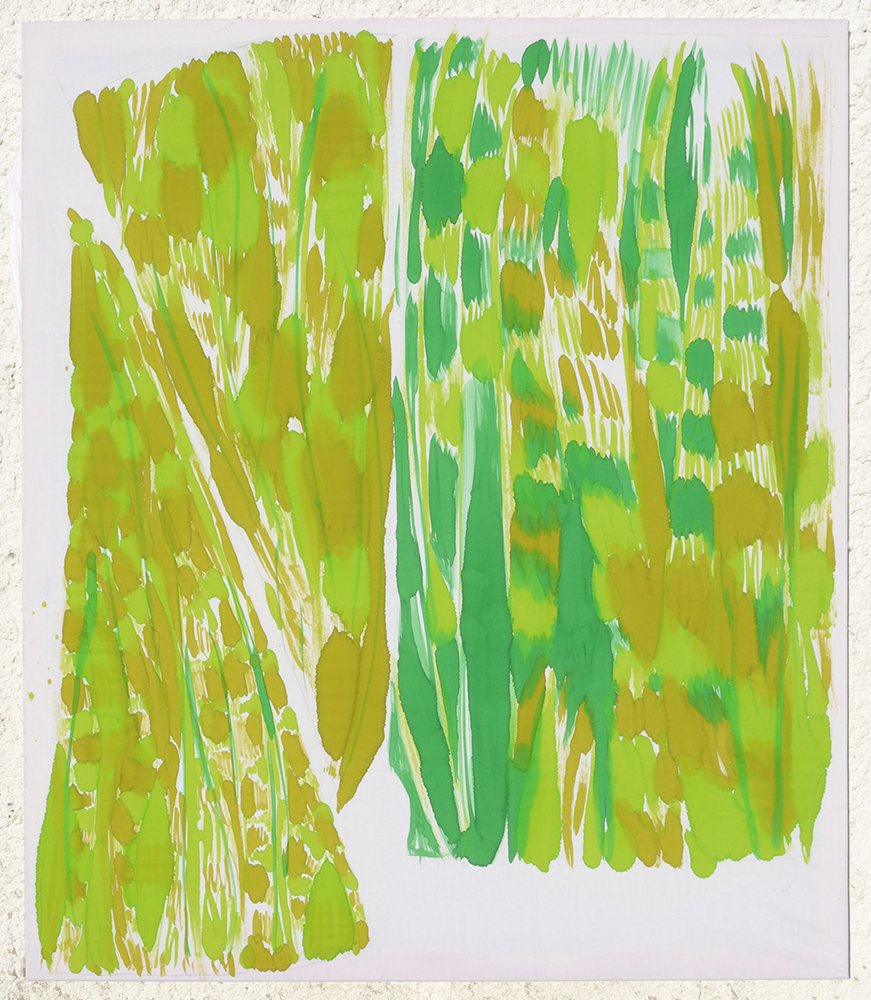
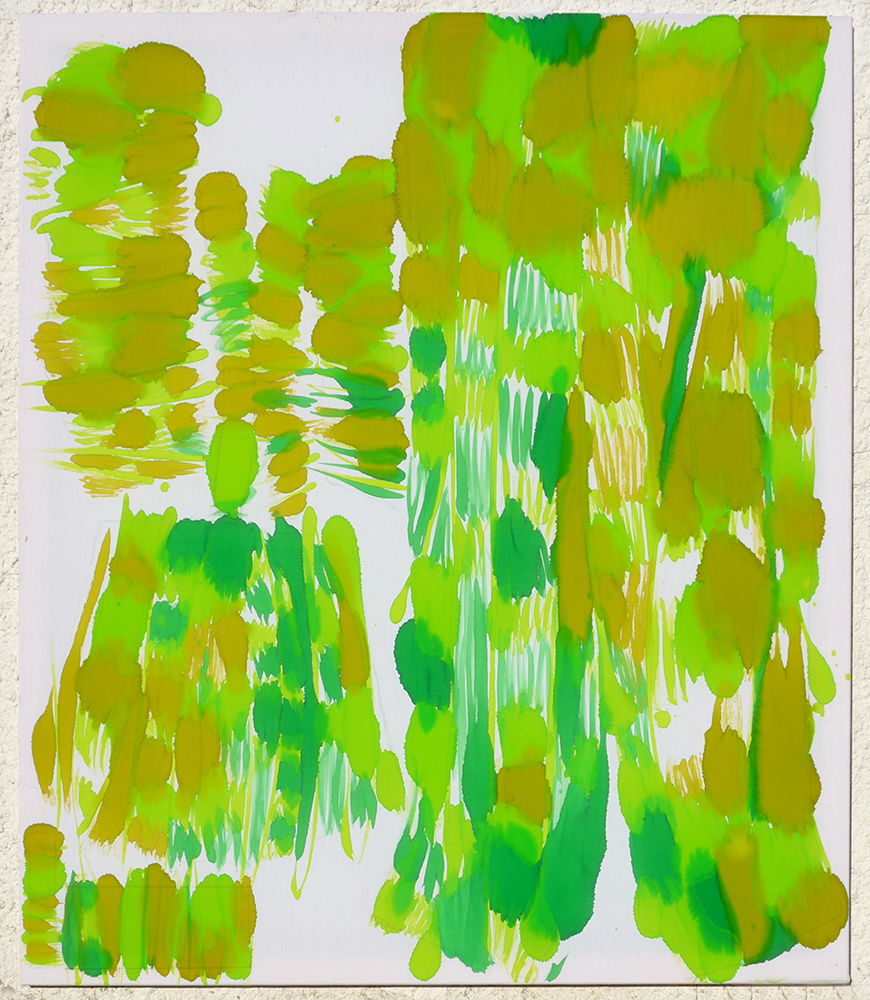
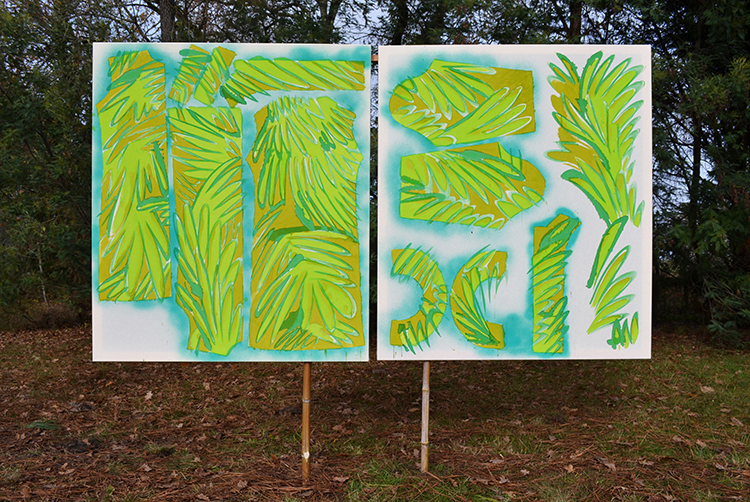
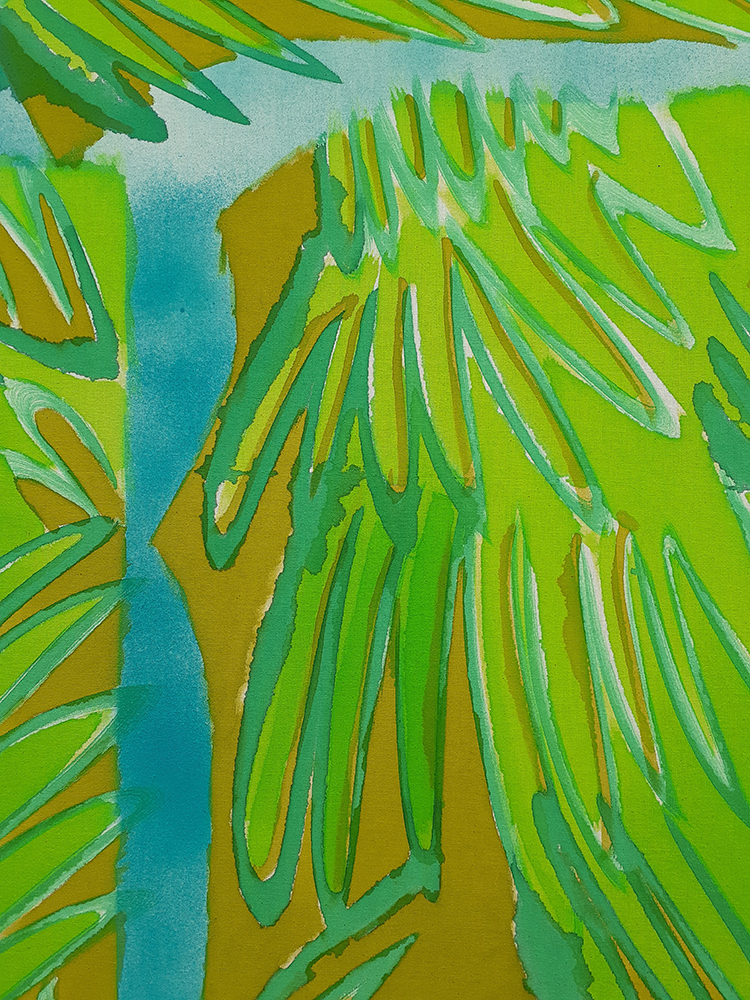
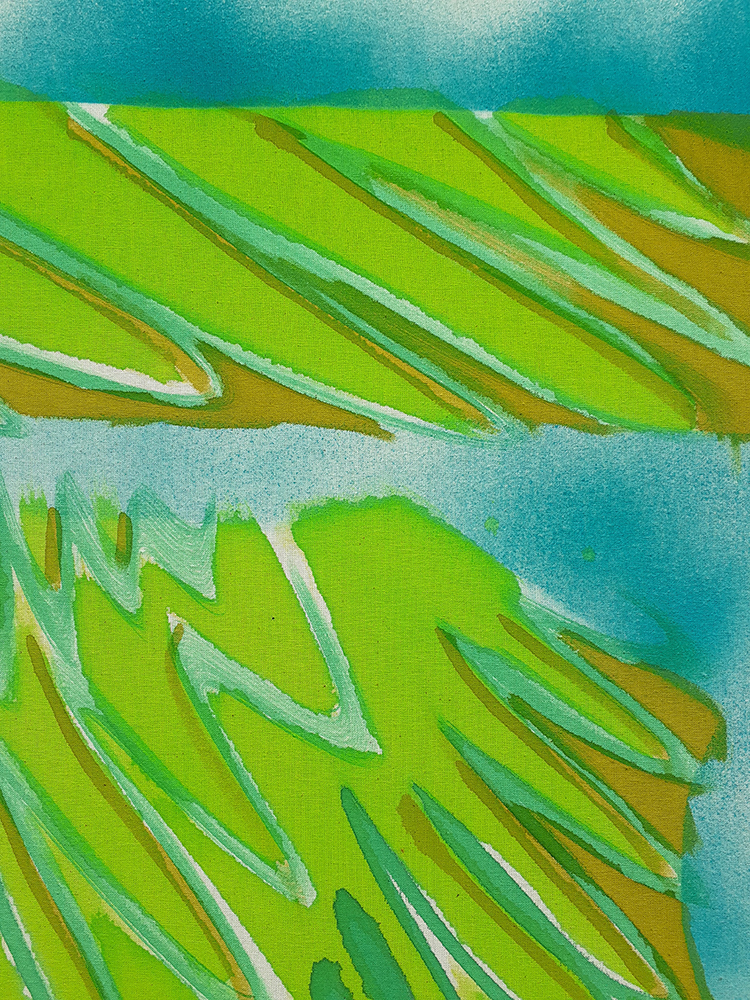
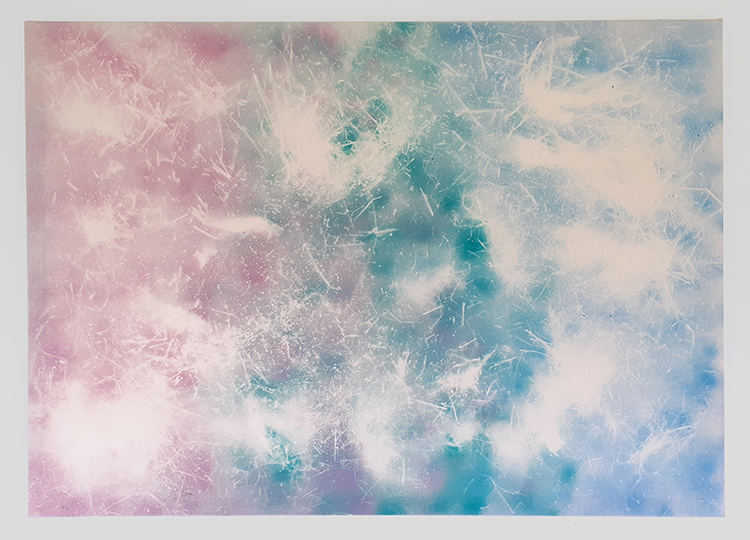
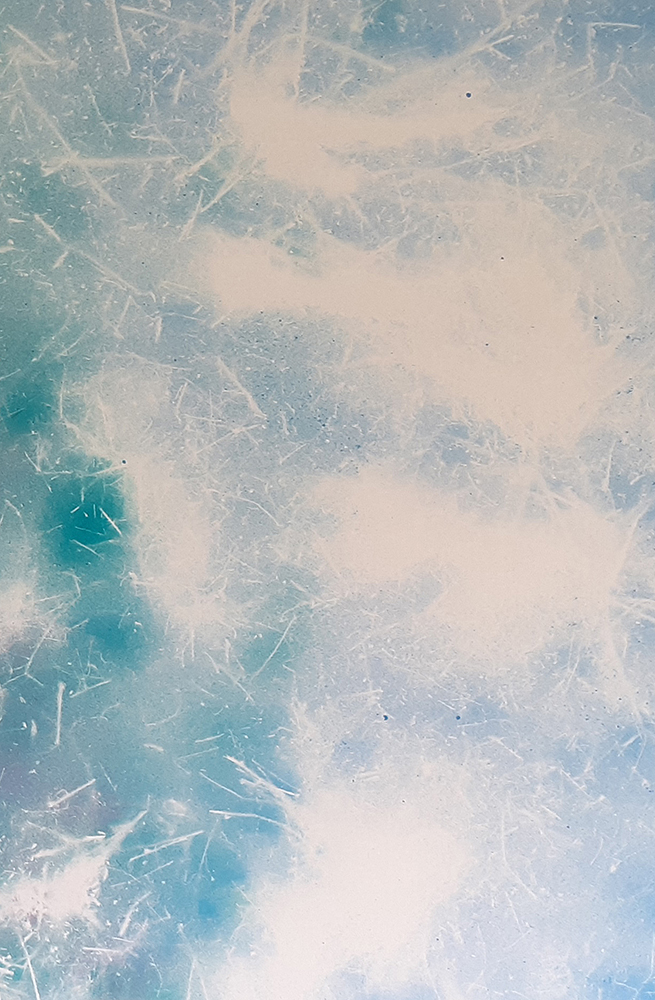
In the series “Pot Plant Camouflage”, Watling’s signature shades of monochrome entangle issues of labor- women’s labor, domesticity, personal and artistic freedom, nature, art history, belonging, and the necessities and joys of existence.
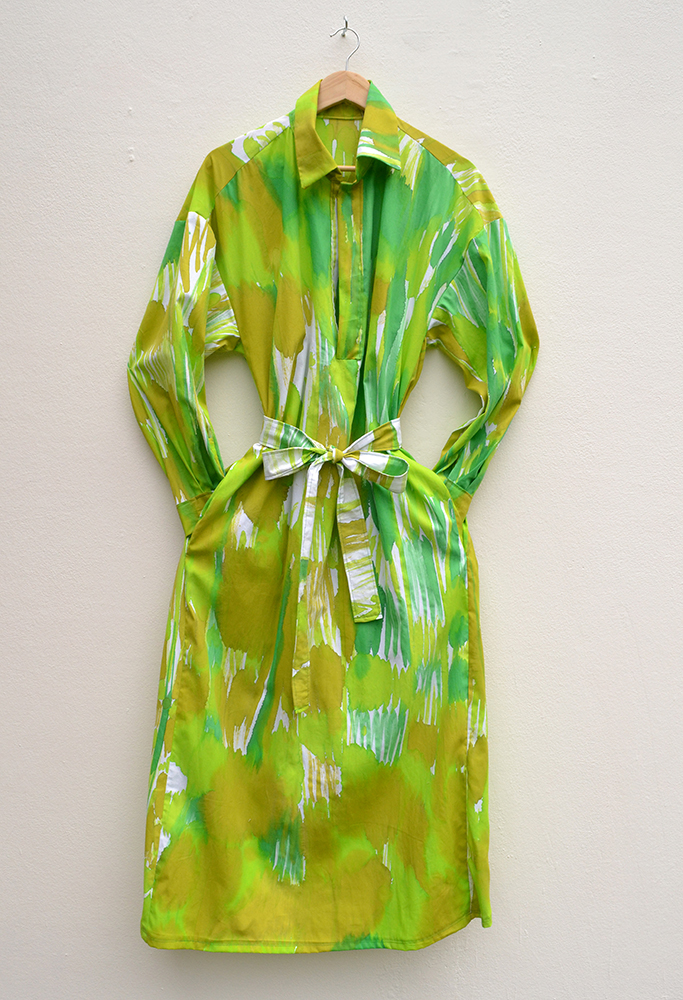
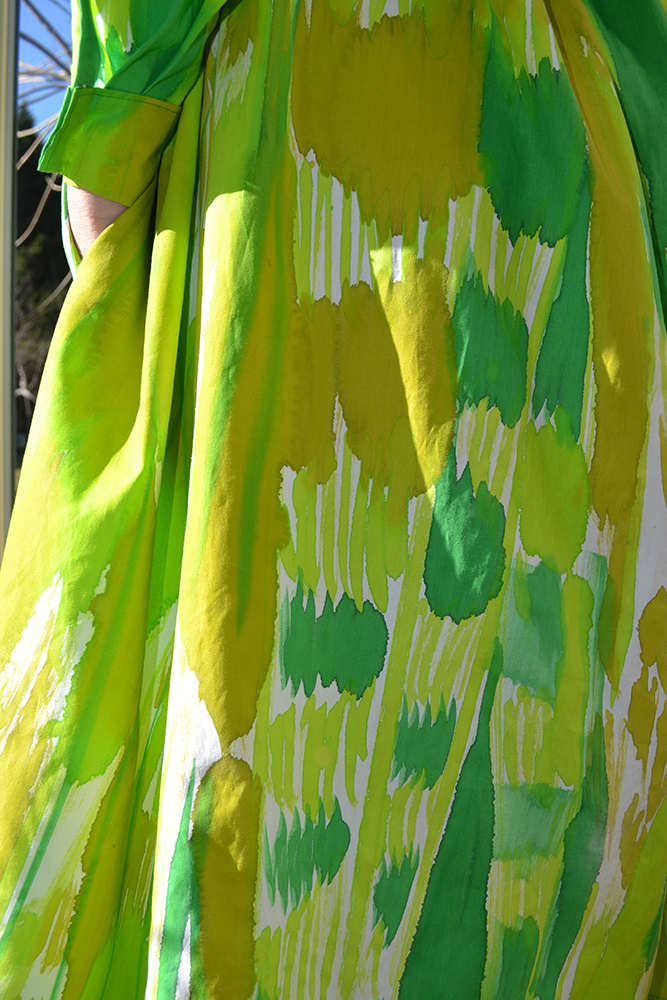
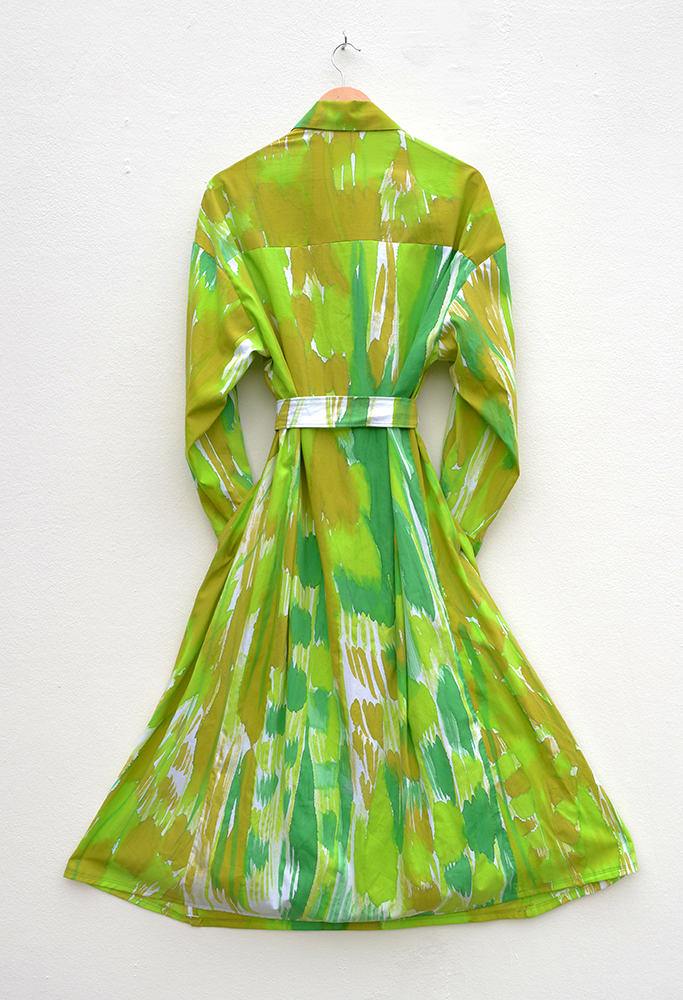
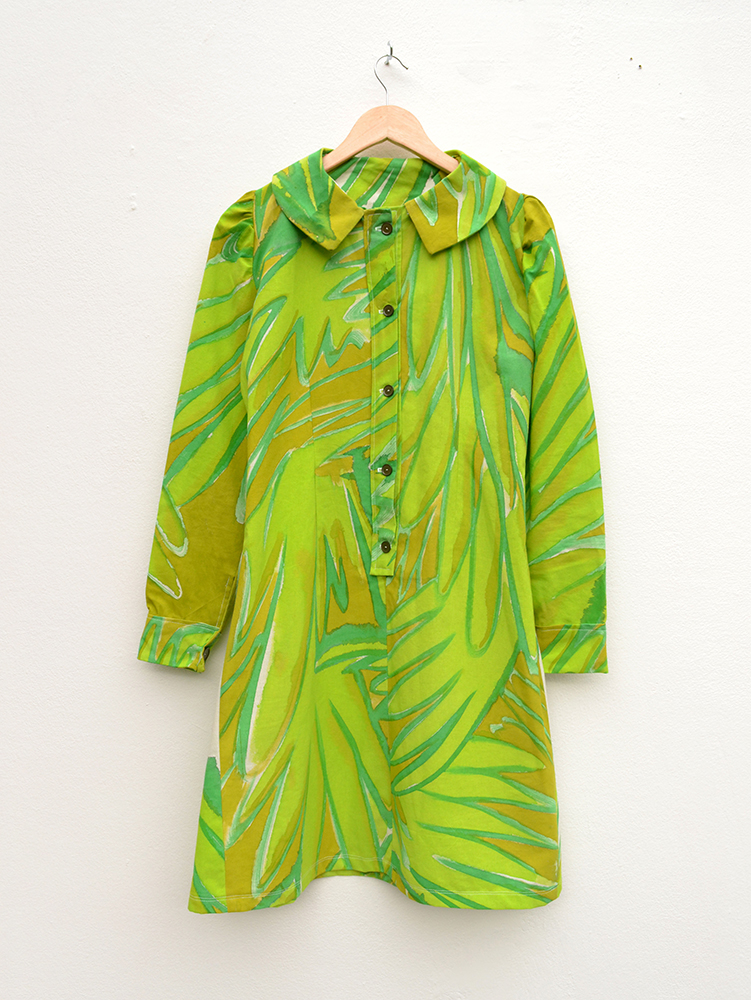
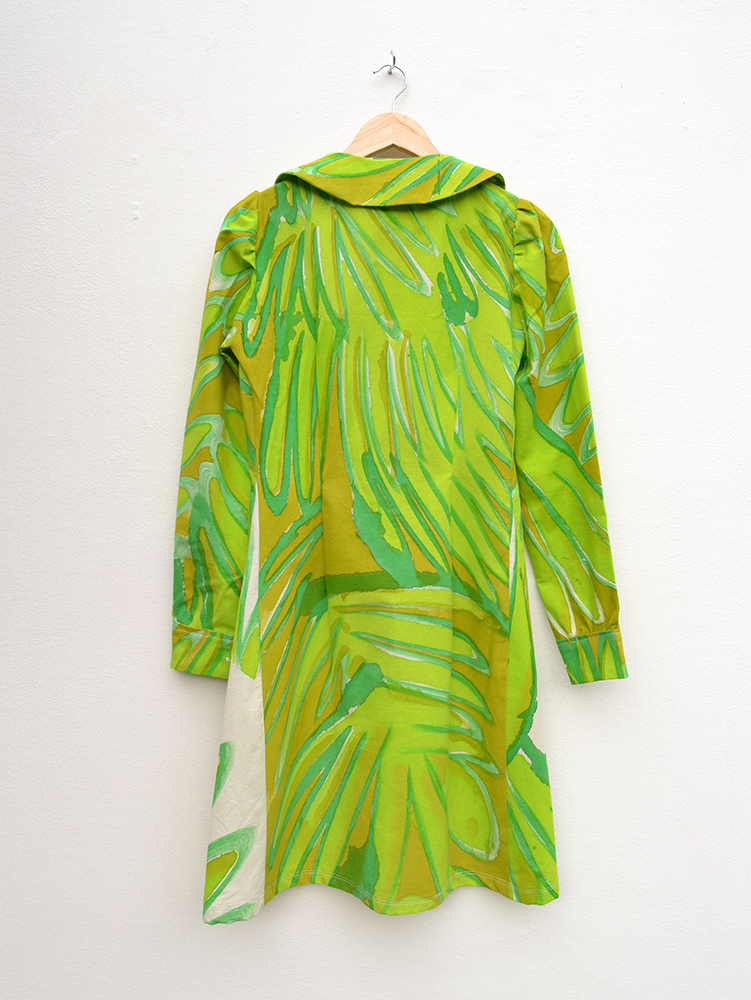
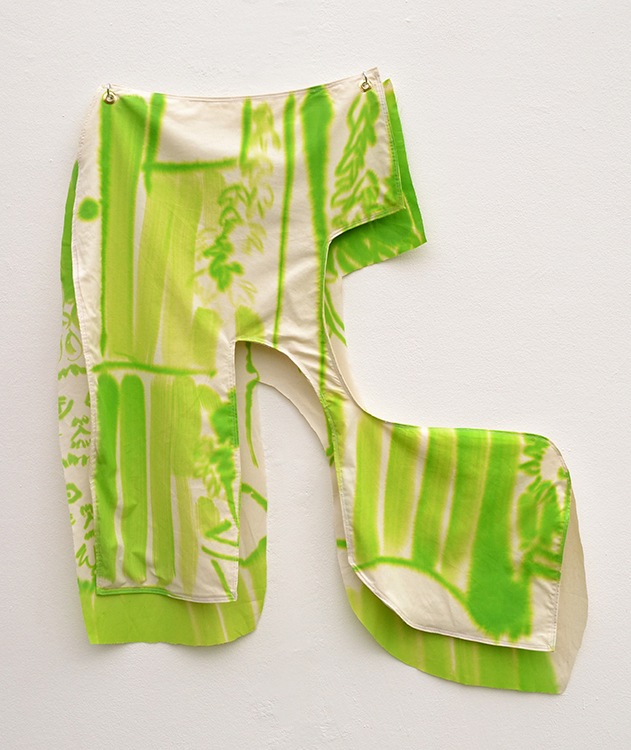
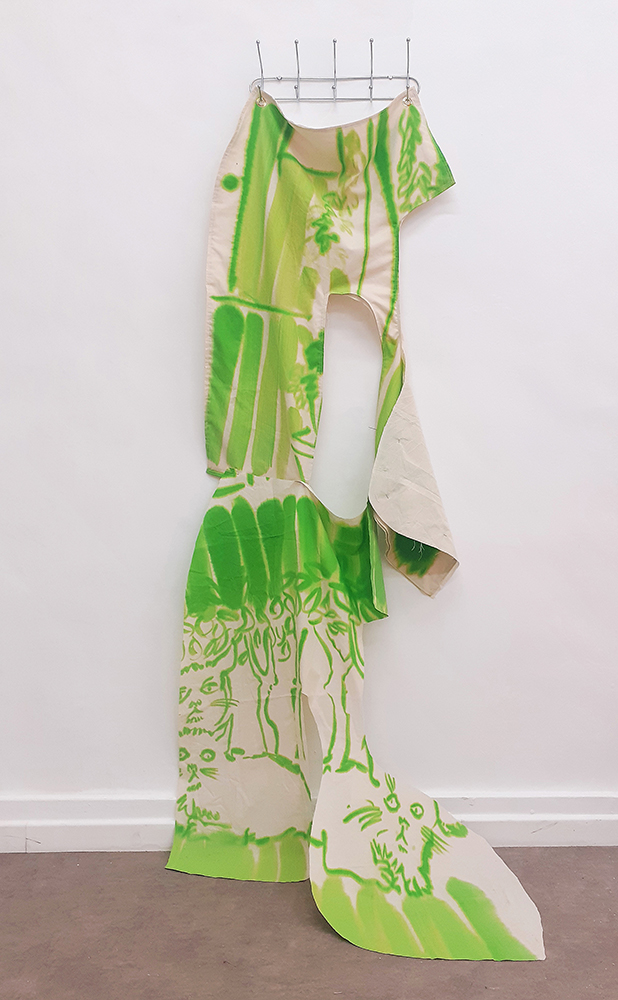
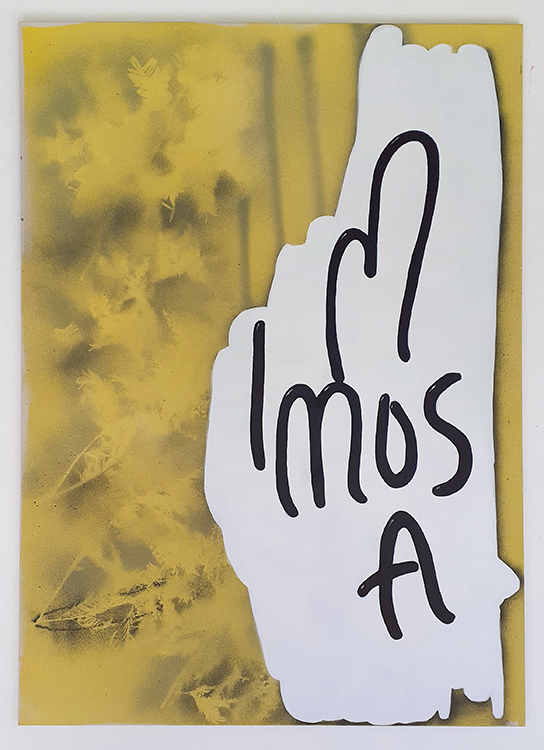
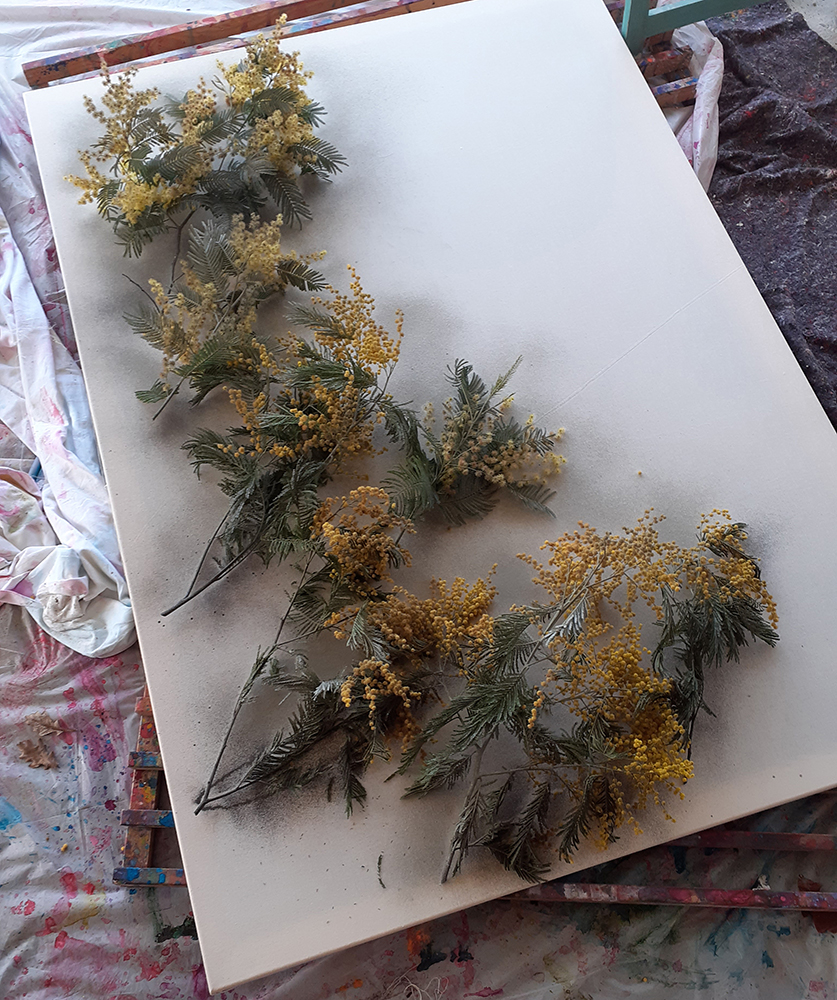
Set outside, with many works painted “en plein air”, this series spins a web of French art history, connecting painting points such as Monet’s and Van Gogh’s “Haystacks” to Bonnard’s “Mimosas” to Sonia Delauney’s (a Ukrainian artist who spent the majority of her life and career in France) textile and costume designs- this being a particular nod to Watling’s own expatriate experience. Certain pieces directly reinterpret these painters’ works and subjects such as the “Haystacks”, while the introduction of garments, paintings sewn by the artist into dresses- “paintings to be worn naked,'' call the body into play and address the role of women’s bodies in “women’s work”.
While what’s tended to, produced and cared for by women are symbols of their work, such as plants, children and garments, like the farmers who rake the haystacks, their call of duty is to keep the world sustained.
In the work “Step Mothers Tongue” (the name of a plant in English) Watling, with her tongue-in-her cheek, connects a link to both the body and the work of mothering- whether or not it’s your own, you’re still given the title of mother to a certain degree. In-laws and step family being a metaphor for assimilation, be it to relatives “or” a culture, can be a heavy task of the self that often goes under appreciated. Despite progress, identifying as a woman is a task of assimilation, we are still1 often expected to serve, look nice and not make too much of a fuss over things, in other words, blend in.
Just taking a peek into classic art history, it’s obvious how much the female form is used to reference beauty, form and nature. But what isn’t always obvious is that those women posing were working. Their bodies, the site of production. This calls attention to the tension within the frame of women’s work: the predicament of simultaneously being called to perform on a level that is hyper perceived and yet much of the physical labor performed today still being highly ignored or invisible, washed out by highly seductive imagery hiding the hoards of fast fashion that continue to pour out of outrageously dire working conditions. Where much of Watling’s practice incessantly pushes to level out the hierarchical value of images through intensive volume, this specific series more directly questions what goes on behind the scenes (behind the canvas curtain) and confronts the imbalance of value between production and freedom in “women’s work.” Looking at all the ways women produce value, just as the term literally implies “work”, the question slips out of one’s mouth too fast to catch, when can she “a”-muse herself on her own terms?
Here is where the role of camouflage in this series, also a garment first introduced by another French painter Louis Guignot during World War 1, disrupts the role of “work” in women’s work. Along with safety, there’s great freedom in being camouflaged. While blending in or as one of the works references- being a wallflower- can be seen as a form of hiding and thus a relinquishing of power, Watling seizes the opportunity to be unnoticed as a space to actually dance and bask in the presence of no-one. To not only “dance “like” no one’s watching,” but to actually dance with no one watching is a rare luxury of past times compared to today’s demand that we all hustle our ‘online presence’ to prove our worth. A luxury particularly confusing to artists of today when recalling the romantic yet very much needed desire to escape or get away from the world in order to focus on one’s work. Just like getting high, particularly with a plant grown locally that is STILL illegal in France, the freedom of no one knowing is so much sweeter.
Watling still manages to point to the price of images by staking claim in the real world, looking at and observing real things, she shows us the invaluable worth of one’s absence in the eyes of others and above all presence in and symbiosis “with”, to reference an incredibly influential idea from her original territory, a world of one’s own and quite simply the world out there.
Erin Gigl 2023
1. Virgina Woolf, "A room of one's own" 1929 |